How Much Water Is Too Much When You Have POTS?
Why 'drink more' has an upper limit with POTS, and how over-drinking plain water without sodium can quietly backfire.
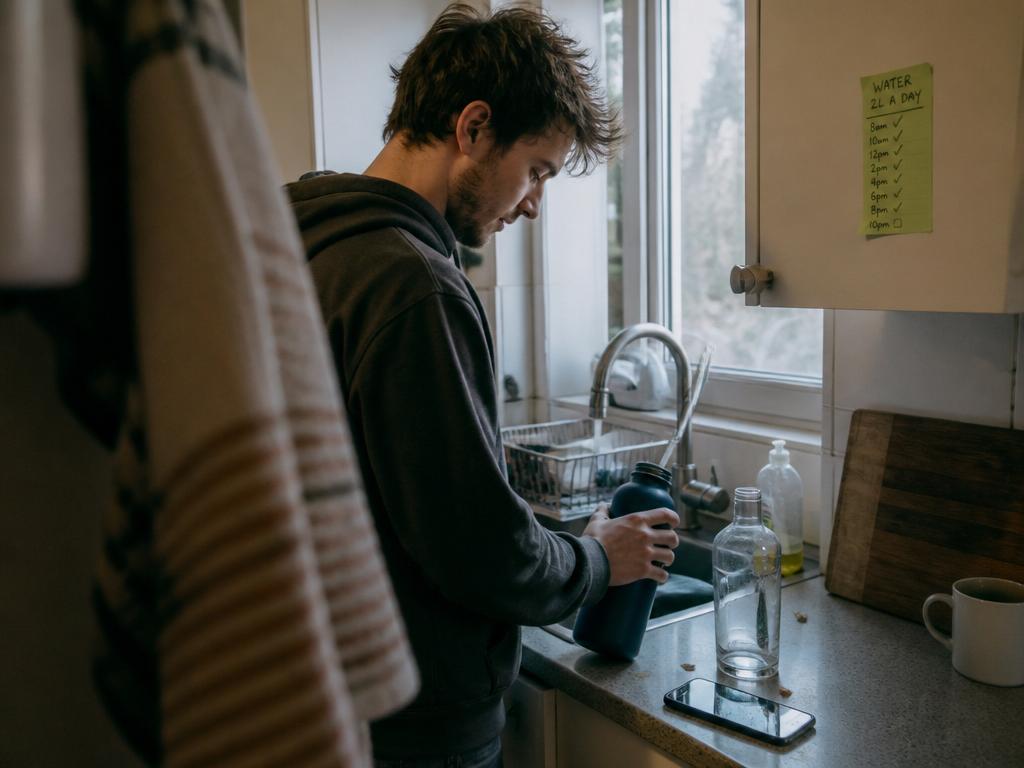
If you have POTS, “drink more water” is probably the first advice you ever heard. It is good advice, up to a point. Past that point, more water is not more help, and occasionally it is the opposite.
The fluid-volume logic behind the 2–3 liter range
The reason fluids matter in POTS comes down to blood volume. Many people with the condition run on the low side, which makes the standing response harder. Getting enough fluid helps keep your circulating volume topped up so your body has more to work with when you stand.
That is why a daily fluid target in the range of roughly two to three liters comes up so often in POTS care. It is enough to support blood volume for most people without tipping into excess. Your own number depends on your size, your climate, your activity, and what your clinician advises, so treat any range as a starting point rather than a rule.
The key idea is that the benefit of fluid is not linear. The first liters do real work. Pouring in far more does not keep adding the same benefit, because your kidneys simply clear the surplus.
Signs you may be over-hydrating (and diluting sodium)
Drinking well past your needs has a downside that gets overlooked. When you take in large volumes of plain water, you can dilute the sodium concentration in your blood. The body wants that concentration to stay in a narrow band, and dropping it too far is its own problem.
You do not need to become anxious about every glass. But it is worth knowing the general signals that you may be drinking more than your body can use well:
- Constant trips to the bathroom with very pale, almost clear urine
- Feeling no better, or even foggier, despite drinking steadily all day
- Nausea, headache, or puffiness after a big water push
- Waking repeatedly overnight to urinate
If you ever feel confused, unusually weak, or notice swelling alongside heavy water intake, that is a reason to contact your clinician rather than push through. These can be signs that sodium has dropped too low.
Why fluid without salt doesn’t expand blood volume
Here is the part that surprises people. Drinking plain water alone is not a reliable way to expand and hold blood volume. Water that arrives without enough sodium tends to pass through. Your kidneys register the dilution and clear the extra, so the volume bump is modest and short-lived.
Sodium is what gives water a reason to stay. It helps your body hold fluid in the bloodstream rather than letting it drain straight out. This is the whole logic behind pairing salt with fluids in POTS: the two work together, and neither does the job well alone.
So the practical takeaway is not “drink less.” It is “drink enough, and make sure some of that intake includes sodium.” A person chugging four liters of plain water with no attention to salt may feel worse than someone drinking less with sodium alongside it.
| Pattern | What tends to happen |
|---|---|
| Plenty of fluid, no sodium | Volume bump is small and brief; frequent urination |
| Adequate fluid plus sodium | Fluid is held longer; steadier symptom support |
| Very high fluid, no sodium | Risk of diluting blood sodium; can feel worse |
The bottom line
With POTS, hydration is about hitting a sensible range and partnering fluid with sodium, not maximizing volume. Most people do well somewhere in the two-to-three liter zone, adjusted for their life and guided by their care team. If you are drinking constantly and still feel off, the fix is usually not more water. It is checking whether sodium is part of the picture, and confirming your targets with the clinician who knows your case.