Working a Desk Job With POTS: Staying Functional While Seated
Blood pooling does not stop because you are sitting — here are desk-friendly counter-maneuvers, hydration timing, and ways to communicate needs.
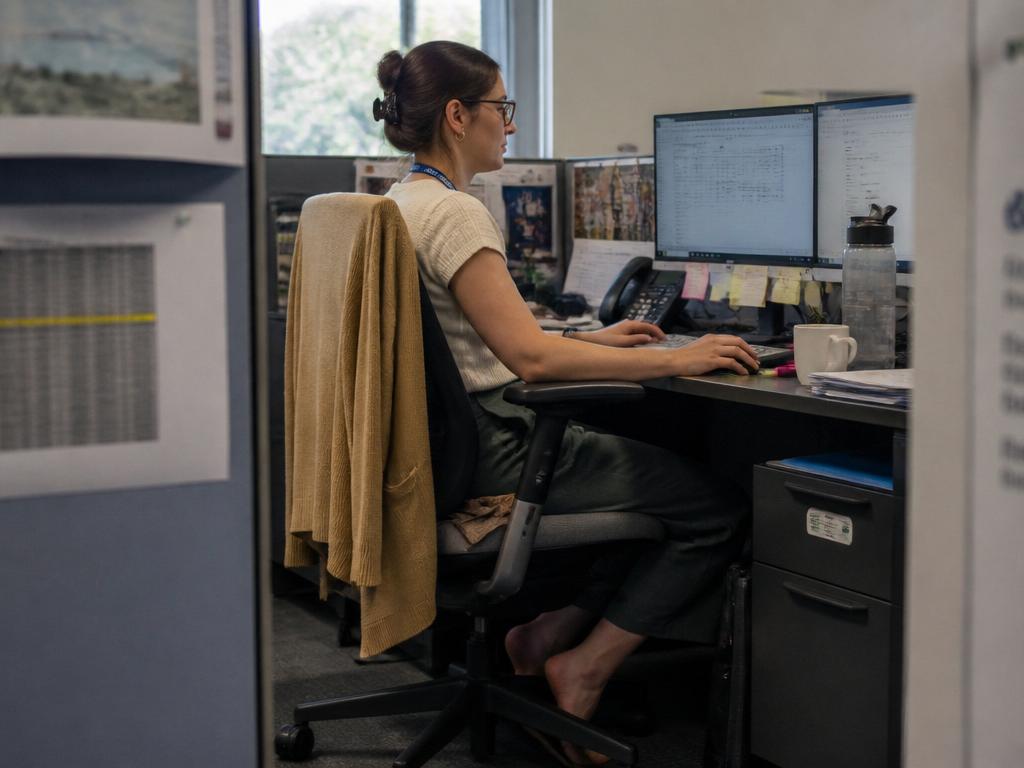
A desk job sounds like it should be easy on POTS — you are sitting, after all. In practice, long stretches of stillness create their own problems, and the standing moments between meetings can catch you off guard. Small habits keep you functional through the day.
Counter-maneuvers you can do at a desk
Sitting still is not the same as resting your circulation. When you stay motionless, blood can settle in your legs with nothing pumping it back up, so symptoms can build even in a chair. The fix is to keep your lower-body muscles quietly active.
These are discreet enough for an open office and effective enough to matter:
- Calf pumps: flex your feet up and down under the desk to push blood upward
- Leg crosses and clenches: crossing your legs and tensing your thigh and buttock muscles squeezes pooled blood back toward your core
- Ankle circles and toe raises: small movements that keep the calf muscle working
- Stand and reset before symptoms build: get up briefly on a schedule rather than waiting until you feel bad
The standing transitions deserve special care. Rising fast from your chair for a meeting is a classic trigger. Pump your calves a few times before you stand, get up slowly, and steady yourself for a second before walking. Building these into your day, rather than reacting to symptoms, is what keeps you ahead.
Hydration and snack timing through a workday
A workday makes it easy to forget fluids entirely. Back-to-back tasks, meetings, and the simple fact that getting up is a hassle all conspire to leave you under-hydrated by mid-afternoon. The countermeasure is to make hydration the default, not a decision.
| Time | Habit |
|---|---|
| Start of day | Arrive hydrated; have a drink before your first task |
| Through the morning | Keep a bottle on the desk and sip steadily |
| Around midday | Eat, and include sodium with your food and fluids |
| Afternoon dip | Top up fluids; a salty snack can help on a low day |
Keeping a bottle in sight does most of the work, because steady sipping becomes the path of least resistance. Pairing fluids with sodium means more of what you drink is retained, which matters across a long sedentary day. A note on meals: large, heavy lunches can pull blood toward digestion and leave some people more symptomatic afterward, so smaller, more frequent eating sometimes sits better.
Communicating needs without oversharing
POTS is largely invisible, which cuts both ways. Colleagues will not see why you need to sit during a standing meeting or step out for a moment, but you also do not owe anyone your full medical history. The goal is to get what you need with minimal explanation.
You can frame needs practically rather than clinically. Asking to sit during a long standing discussion, keeping a water bottle at your desk, or stepping out briefly are all reasonable requests that need no diagnosis attached. A simple “I manage a health condition and a few small accommodations help me stay at my best” covers most situations.
If your needs are more substantial, many workplaces have formal processes for accommodations, and a conversation with HR or a manager can secure things like a flexible schedule, a parking spot closer to the door, or permission to work seated. What you disclose, and to whom, is entirely your choice. Your clinician can also provide documentation if a formal request calls for it.
The bottom line
A desk job still pools blood when you sit motionless, so weave in calf pumps, leg clenches, and slow, prepared transitions before you stand. Make hydration automatic with a bottle in sight and sodium alongside meals, and consider smaller meals if big lunches flatten you. Share only what you need to get practical accommodations, and lean on formal processes when the support has to be bigger. Tune the specifics with your clinician.